Protect Yourself from Poor Air Quality
- Real-Time Air Quality
- MyRAAN
- AirNow
- Widget
-
Real-Time Air Monitoring Stations
- Manteca
- Stockton
- Tracy
- Modesto
- Turlock
- Merced
- City of Madera
- South Madera County
- Jerseydale
- Clovis
- Southeast Fresno
- Central Fresno
- North Fresno
- Huron
- Parlier
- Tranquillity
- Hanford
- Corcoran
- Ash Mountain
- Lower Kaweah
- Porterville
- Visalia-Church
- Arvin
- Central Bakersfield
- South Bakersfield
- Edison
- Lebec
- Maricopa
- Oildale
- Shafter
- Protect Yourself from Poor Air Quality
UNIQUE AIR QUALITY EPISODES
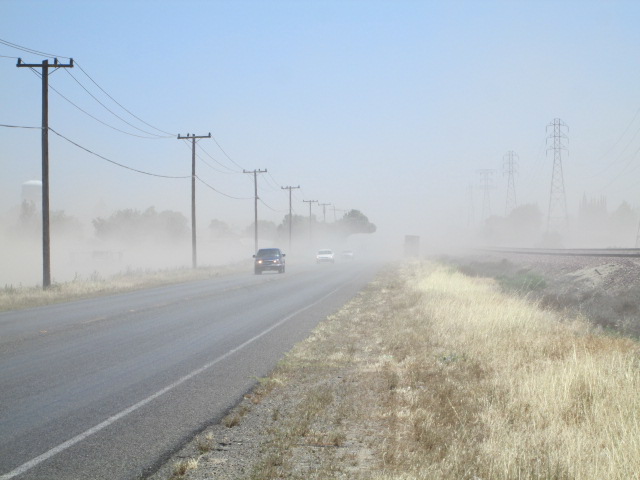
Air quality in the San Joaquin Valley can change quickly. Strong winds, dust storms, wildfire smoke, temperature inversions, and rapid shifts in weather can all lead to sudden increases in particulate matter (PM) pollution.
To stay safe during rapidly changing conditions, monitor hourly air quality through the District’s Real-time Air Advisory Network (RAAN), EPA’s AirNow.gov or EPA’s Fire and Smoke Map. Keep sensitive individuals and pets indoors, and seek medical attention for anyone experiencing noticeable or worsening breathing difficulties.
Common Causes of Rapid Air Quality Changes
- High Winds / Dust Storms: Dry soil can be picked up by strong winds, causing sharp PM10 and PM2.5 spikes.
- Wildfire Smoke: Smoke from nearby or distant wildfires can move into the Valley without much lead time, especially when pushed by sudden wind shifts.
- Temperature Inversions: Calm, cold conditions trap any local pollution near the ground.
- Pre-Storm Outflows: Before rainfall begins, strong, dry winds may move through the Valley and stir up dust ahead of the storm.
What To Do During Unique Air Quality Episodes
During unique air quality episodes, whether caused by strong winds and blowing dust or by drifting wildfire smoke, conditions can change quickly and lead to sudden increases in particulate matter pollution. The steps below outline how residents can protect themselves during these events.
- Monitor air quality conditions at AirNow.gov or myRAAN.com
- Limit outdoor activity, especially for children, older adults, and individuals with heart or lung conditions.
- Stay indoors as much as possible during dusty conditions or wildfire smoke.
- Keep windows and doors closed to prevent dust or smoke from entering.
- Run home and vehicle HVAC systems on recirculate and use a high-efficiency filter (MERV-13 or higher if your HVAC system can safely use one).
- Use a HEPA air purifier or a DIY filtered box-fan to improve indoor air.
- Reduce indoor pollution sources like candles, frying, or vacuuming, especially during wildfire smoke events.
- Keep sensitive individuals and pets indoors during both blowing dust and smoke conditions.
- If you must be outdoors when wildfire smoke is present, wear a properly fitted N95 respirator.
- Visit a Clean Air Center for filtered air during wildfire smoke.
- Consult your primary care provider if symptoms worsen or breathing becomes difficult.
How to Report Air Quality Concerns
Residents can report odors, dust, smoke, or other concerns 24/7 by visiting www.valleyair.org/complaints or through the Valley Air App.
All complaints will be investigated by Valley Air District staff.